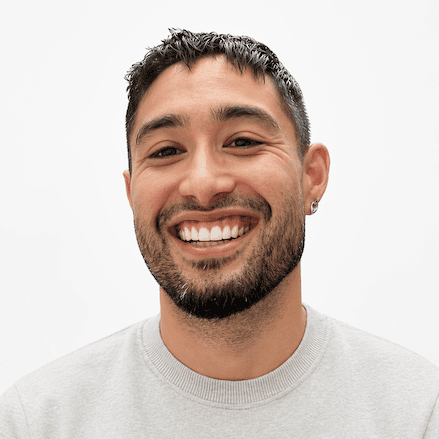
I believe social health is the next mental health. And I founded Seen to build tools that help people build healthier connections by developing their relational fitness.
We have personal training for the body. We have therapy for the mind. But there is no equivalent support for the thing that researchers, doctors, philosophers and our own inner voice tells us matters most: our relationships.
At Seen, we’re on a mission to bridge this “connection gap.”
For more than a decade, I built teams inside high-growth startups. At Springboard, one of the largest online bootcamps for tech careers, I launched the corporate training business, hired and managed 50+ people, and helped scale the company from 6 to 300. I hit every goal, crushed every OKR, and was on the fast track to senior leadership.
And then I got blindsided.
I was passed over for a promotion I thought I'd earned. Two executives didn't like how I handled conflict. When the feedback came back from my own team, it was split right down the middle — half said I was the best manager they'd ever had. Half said they didn't trust me enough to come to me with problems.
I was shocked. Pissed. Confused.
Not just by the rejection itself, but what it revealed: the thing holding me back wasn't strategy, wasn't output, wasn't work ethic. It was the way I was showing up in relationships. I had hit a ceiling I didn't even know existed — a relational one.
So I started working on it. I hired an executive coach. I took courses. I spent five years studying the science of human connection — what builds trust, what breaks it, and how to design for better relationships.
And slowly, everything changed.
Not just at work. Everywhere. The way I listened. How I showed up with my team, my friends, my partner, my family. People I'd known for years started responding to me differently, noticing how I was changing. More profoundly, I began to see people around me in new and meaningful ways, ways I had overlooked or not been able to see before. It truly changed my life for the better.
That transformation is what made me ask a bigger question: why did I have to fail first to discover this?
Why did it take a career setback and an executive coach to learn skills that should be as accessible as going to the gym?
The reality is that relational fitness — the ability to connect, deepen and repair your connections with the people around you — is a trainable skill. But we don't treat it that way. I think, in part, because people don't realize that they can.
Right now, many tools are gatekept more than most realize. Locked behind business schools, executive coaching, and leadership programs at companies big enough to afford them. If you're a nurse, a teacher, a new parent, a veteran — you probably have no idea these tools exist.
That's what Seen is going to change.
We’re building the awareness, the tools, and eventually the infrastructure so that relational fitness becomes as normal and accessible as physical fitness. A thing you work on. A thing you get better at. A thing that's available to everyone, not just the lucky few.
Connection is not a personality type. It’s a skill like any other.
Many of the people I work with come in feeling more isolated than is comfortable to admit. There's a stigma around loneliness, around saying I don't know how to do this naturally. There’s a vulnerability in admitting as a leader that you're not great at connection. But this is not an individual failing — it's a modern, systemic problem — and it's more solvable than it sometimes feels.
Nothing is more foundational to how we perform, create, and live than the quality of our connections to each other. Everyone deserves the tools and support to build the kinds of connections that make life worth living.
If this resonates with you, I'd love to have you join us.